

- Market / location
- Inkjetwell application sampling and customer material trials
- Product / substrate
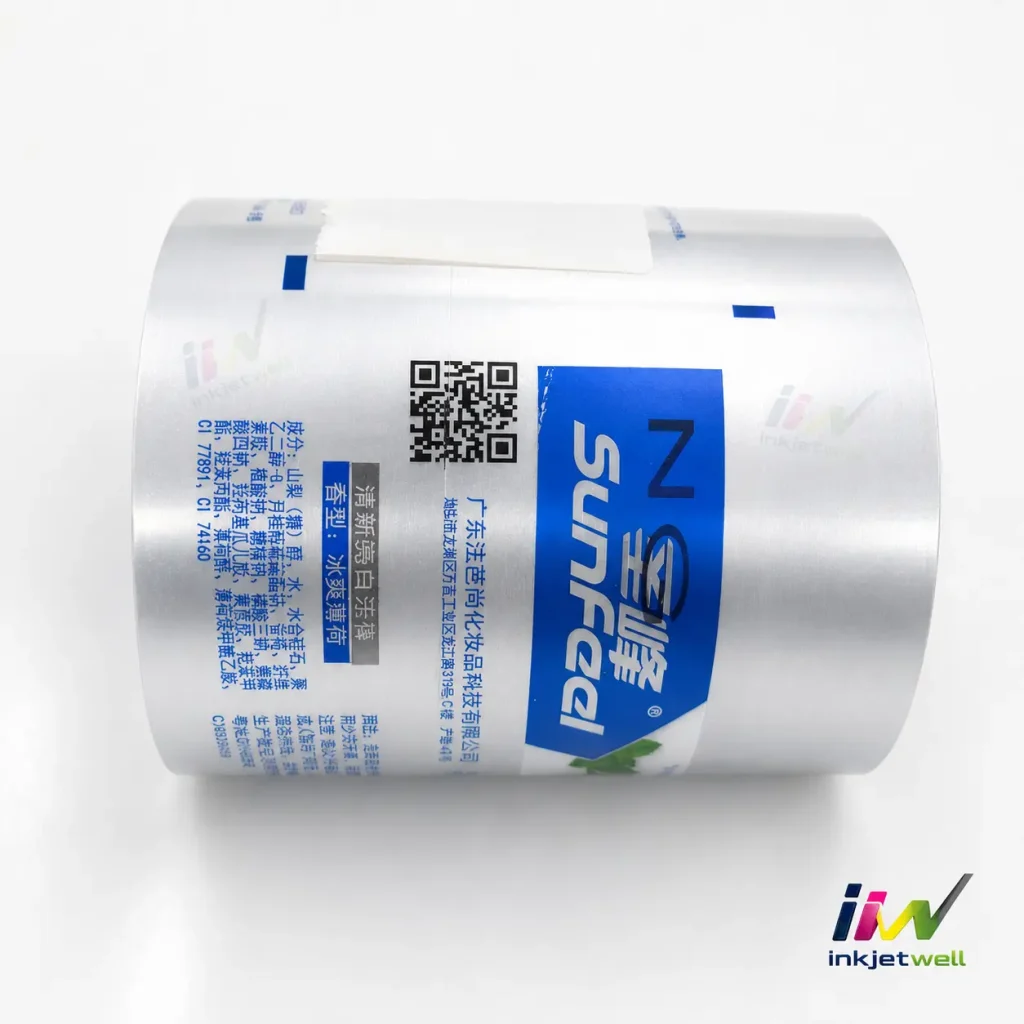
- Cosmetics packaging roll material, flexible pouches and specialty transparent web
- Verified result
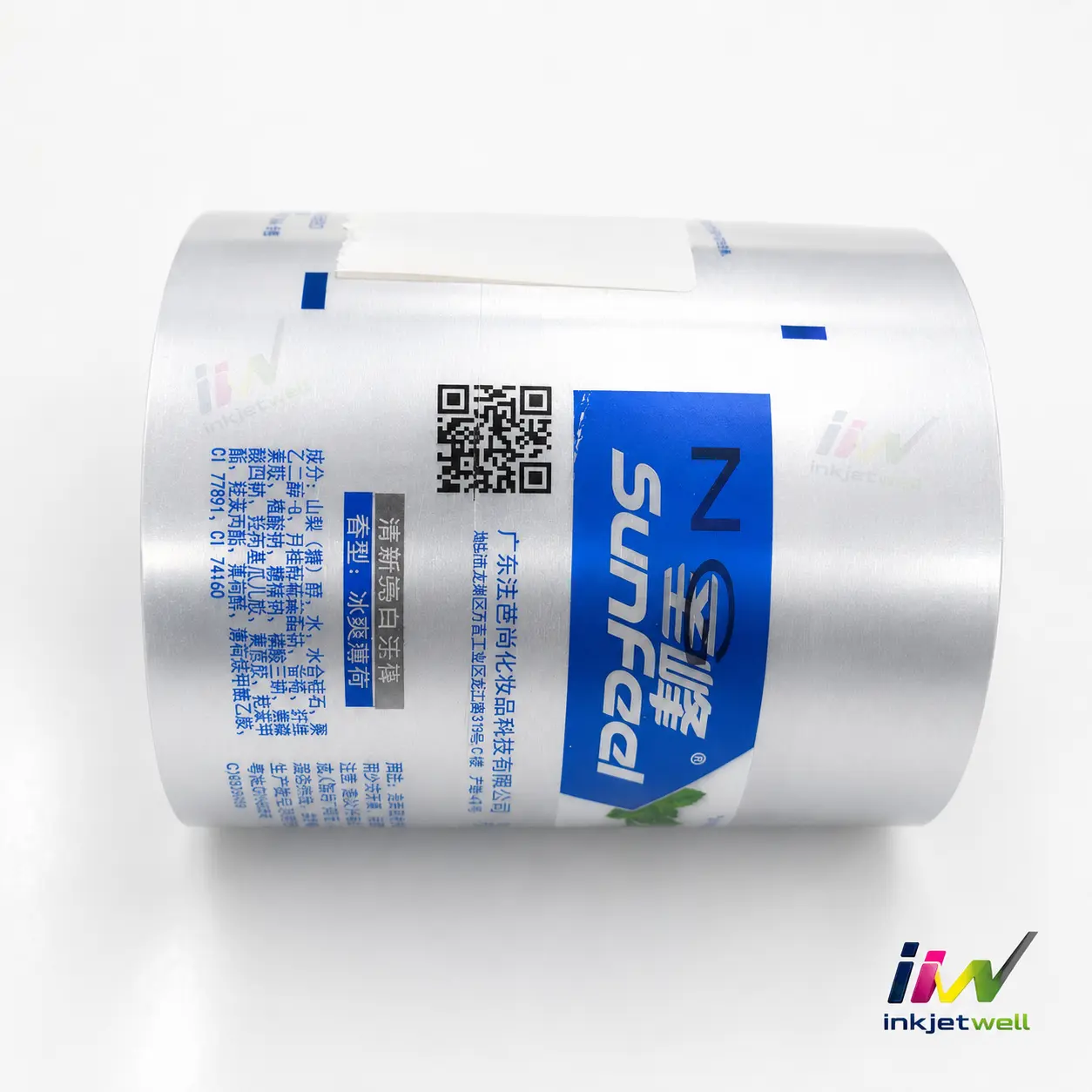
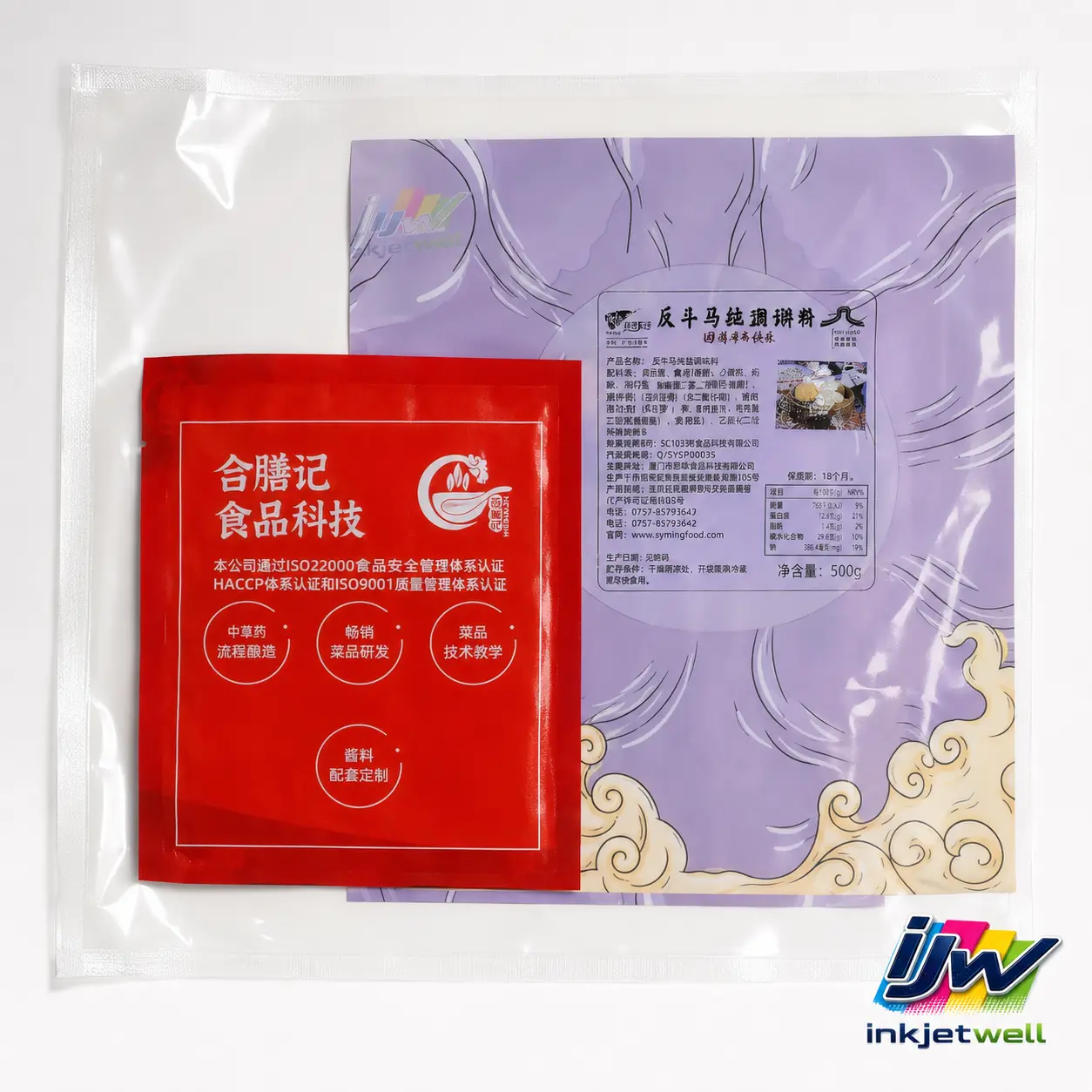
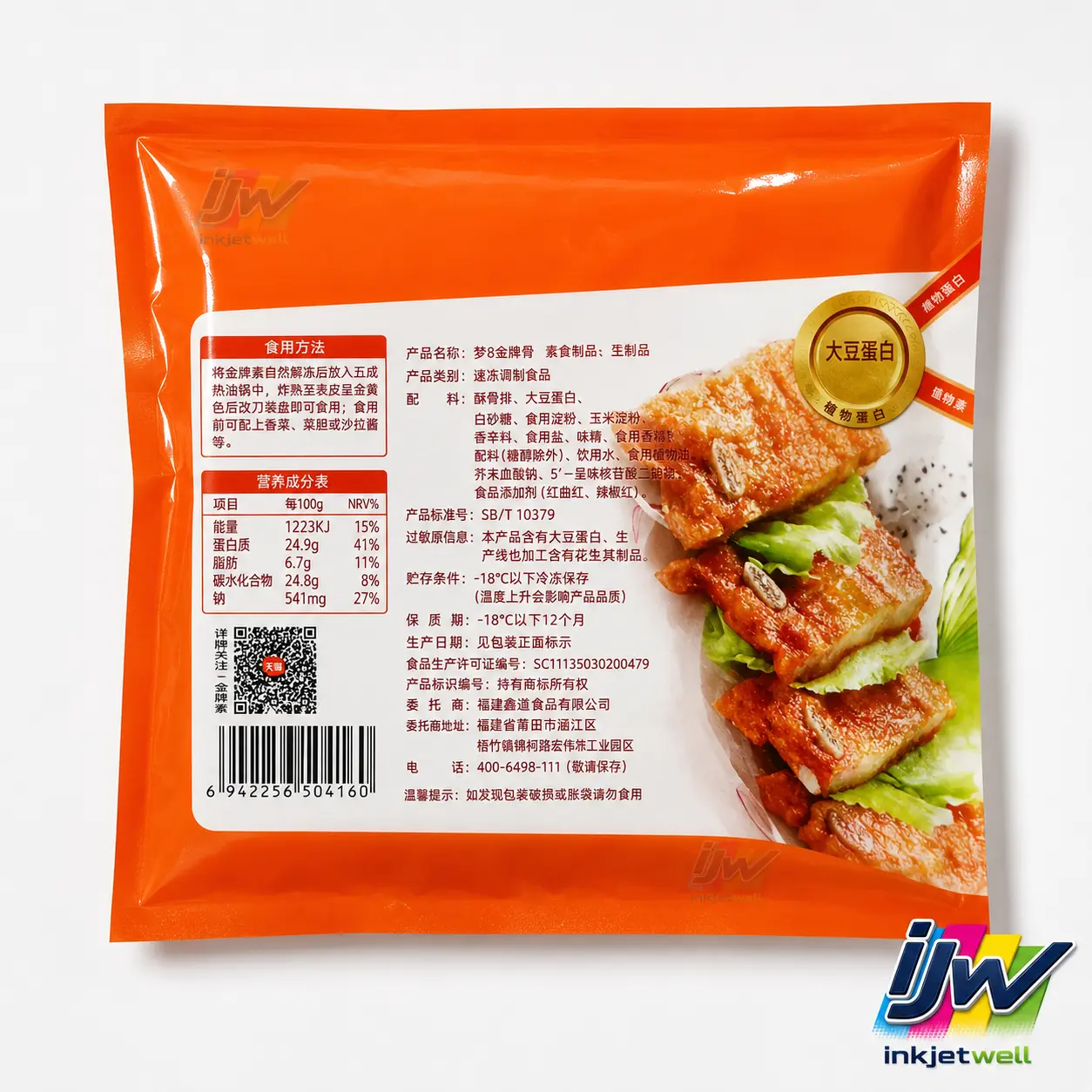
- Sample images confirm fine text, QR/barcode artwork and detailed graphics on several flexible constructions; video confirms red variable content on a moving transparent web. Food-contact approval and line speed are not implied.
Direct answer
Flexible-packaging buyers often need proof on their own material before they need a machine quotation. This application-sampling case documents a cosmetics roll sample with a compact QR code and fine text, two pouch constructions, a detailed food-package sample and a transparent web running through a UV coding trial. The combination demonstrates Inkjetwell's evaluation process without presenting every sample as a completed customer installation.
Documented application evidence
The close-up images make edge definition, small text and overall surface appearance visible. The accompanying video adds process evidence: software-driven red content is printed and cured on a moving transparent web. The exact base material in that clip is not asserted because no material certificate accompanied it.
Some samples contain third-party packaging artwork. They are shown as application examples only; trademarks remain with their owners and no endorsement, supply relationship or packaging approval is implied.
Application overview
| Case type | Application sample evaluation plus moving-web trial |
|---|---|
| Markets | Cosmetics, food and general flexible packaging |
| Content evaluated | QR, barcode, fine text, color graphics and variable fields |
| Key material issues | Treatment, coating, flexibility, blocking and print side |
| Evidence | Three close-up sample groups and one process video |
| Approval boundary | Packaging safety and production performance require project validation |
Customer requirement and production challenge
Cosmetics packaging is viewed closely and must support small type and premium graphics. Food packaging adds code readability and packaging-safety questions. Both may use films that look similar but have different treatment, coatings, laminations and sealing processes.
A high-quality photograph can show appearance but cannot prove resistance, migration or production speed. A useful sample program therefore connects visual output with material identity and a written test plan.
Inkjetwell integration approach
Inkjetwell asks the buyer to mark the required variable zone, viewing side and downstream process. A small test matrix can compare ink channel, pretreatment, UV setting and coverage. Once a sample is selected, the same artwork moves to a controlled web test using the intended repeat and line conditions.
For codes, scanning is performed from the real viewing side and over the final background. For pouches, cure and resistance are checked before and after representative handling, lamination or sealing when those steps are part of the product process.
Demonstrated outcome
The samples demonstrate that Inkjetwell can reproduce compact machine-readable elements and detailed packaging graphics across several flexible formats. The transparent-web video then connects the sample discussion to an operating print-and-cure process.
This evidence is most valuable as a qualification case: it shows what can be evaluated and how the buyer moves from an image request to an approved production recipe.
What this case does not claim
The images do not establish that all visible package artwork was printed in one pass or that every construction is suitable for the same system. The final scope is defined from source artwork and process records.
No statement is made for direct food contact, migration or regulatory compliance. Those require documented ink and package approval for the target market.
Production validation checklist
- Label each supplied roll with polymer, coating, treatment and print side.
- Provide editable artwork and identify fixed versus variable elements.
- Specify code payload, size, scanner and viewing conditions.
- Describe lamination, sealing, filling and storage after printing.
- Agree on visual, adhesion, blocking and scan acceptance tests.
- Keep the approved sample and recipe as the production reference.
Common buyer questions
Can one UV inkjet system print cosmetics and food packaging?
The platform may serve both, but each material, print location and regulatory use needs a separate approved ink and process.
Can it print a complete color design as well as a QR code?
Multi-channel configurations can produce color graphics, while variable codes may be printed in black, white or color. The required channels and coverage must be defined from final artwork.
Why is a roll sample better than a loose film piece?
A roll allows web tension, curl, treatment consistency, registration and rewind behavior to be tested under realistic conditions.
Can the QR code change on every pouch?
Yes when the print repeat and subsequent pouch-making process keep each database record aligned with the correct package.
Request an application test
Send Inkjetwell the actual production material or parts, final-size artwork, required print position and width, line speed range, product spacing, line photos or video, variable-data format, scanner requirements and required resistance tests. We will use those details to propose the printhead arrangement, transport or retrofit method, sensing, UV curing, data workflow and inspection plan.
Media evidence note: the images and videos on this page document Inkjetwell application samples or production configurations supplied for this case library. Customer identities are withheld unless separately authorized. Visible third-party marks remain the property of their owners and do not imply endorsement.