





- Market / location
- China — packaging-printing production application; customer identity withheld
- Product / substrate
- Preprinted packaging sheets on an existing press transport
- Verified result
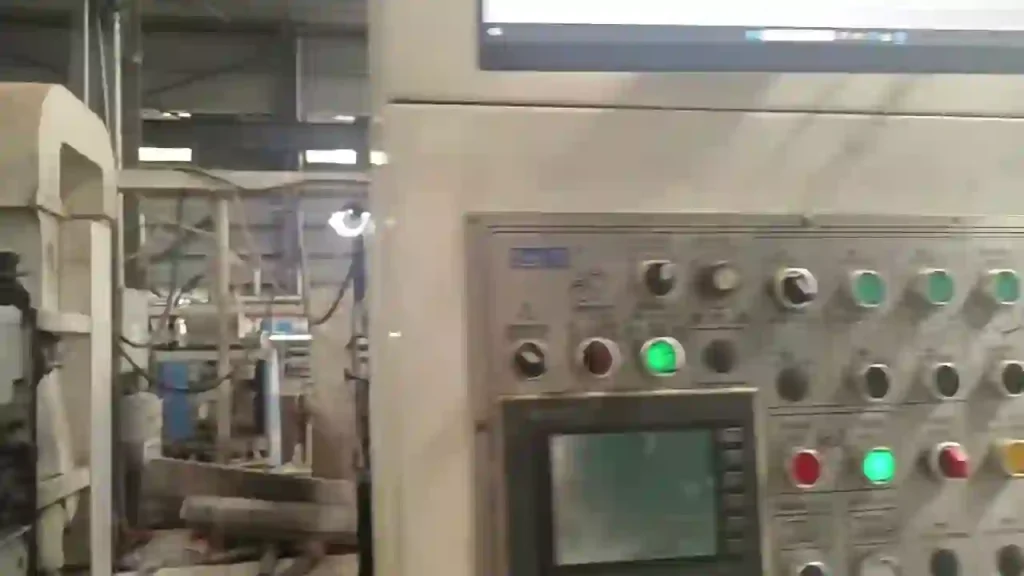
- Production footage shows job setup, sheet movement and printed QR/registration artwork on the installed line. It does not establish a specific throughput or inspection grade.
Direct answer
A UV inkjet module can add changing QR codes, barcodes, numbers and verification targets after the fixed packaging design has already been printed. The recorded line demonstrates this late-stage digital step on an existing packaging press, preserving the customer's base equipment while adding database-driven content.
Documented application evidence
The footage connects three important pieces of evidence: the job software, the moving sheet and the printed result. This supports a real integration narrative and avoids claiming that a loose sample alone proves production readiness.
The visible QR code and target show the intended variable zone, but the video is not a formal barcode report. Final geometric accuracy and scan grading must be documented with the buyer's inspection method.
Application overview
| Application | Late-stage variable-data addition |
|---|---|
| Base equipment | Existing packaging press or sheet transport |
| Typical content | QR, barcode, serial, batch and registration marks |
| Trigger | Product sensor plus encoder or machine signal |
| Curing | Inline UV matched to sheet motion |
| Evidence | Job-software and production-line video |
Customer requirement and production challenge
Conventional printing is efficient for fixed artwork but uneconomical when every package needs unique data. The upgrade must add digital content without disturbing registration, damaging preprinted surfaces or creating a data mismatch during stops.
Press access is limited, and the print location may already be surrounded by rollers, guards and finishing stations. The integration therefore has to be designed around the machine's true web or sheet path rather than attached wherever space appears available.
Inkjetwell integration approach
Inkjetwell maps the artwork position to the transport reference, mounts the head over a stable span and uses encoder feedback so dot placement follows line movement. The curing and shielding arrangement is selected to avoid contact before cure and to preserve operator access.
The data workflow includes file loading, record count, start position, stop/restart behavior and reconciliation of waste. Where print verification is required, the camera and lighting are specified from the actual code size and substrate.
How buyers can use this evidence
A packaging converter can use this case as a retrofit checklist rather than as a fixed machine quotation. Compare the documented sheet path with your press, note the available straight span, and provide a photo that shows rollers and guards around the intended print zone. The final proposal is then based on the variable area, substrate finish, registration tolerance and data workflow. This avoids selecting print width before the physical and data constraints are known.
Demonstrated outcome
The documented press shows that variable printing can become one controlled station inside an established packaging workflow. It provides a practical route for serialization, promotional campaigns and shorter data-change cycles.
Because the station is modular, the final number and position of printheads can be matched to the package layout. The footage supports the retrofit method, while project acceptance supplies the measurable production values.
What this case does not claim
The article does not claim that every press can be retrofitted without mechanical changes. Vibration, speed, available distance and control signals determine feasibility.
A visible code is not automatically a verified code. Grade, database integrity and downstream readability are separate acceptance items.
Production validation checklist
- Provide line drawings or a clear video of the sheet path.
- Send final packaging sheets including coating and varnish.
- Define print origin and registration tolerance.
- Specify line speed, acceleration and stop behavior.
- Define data reconciliation and rejected-sheet handling.
- Approve curing, guarding and maintenance access.
Common buyer questions
Will the retrofit replace the existing press?
No. It is normally an added digital station using the existing equipment for the main fixed-color process and material transport.
Can the printed data change on every sheet?
Yes, provided the record queue remains synchronized with product detection and restart logic.
Can it print over varnished packaging?
Potentially, but the exact varnish needs adhesion and curing tests.
Is a camera required?
It depends on the buyer's risk and compliance plan. High-integrity serialization normally benefits from inline verification and reject control.
Request an application test
Send Inkjetwell the actual production material or parts, final-size artwork, required print position and width, line speed range, product spacing, line photos or video, variable-data format, scanner requirements and required resistance tests. We will use those details to propose the printhead arrangement, transport or retrofit method, sensing, UV curing, data workflow and inspection plan.
Media evidence note: the images and videos on this page document Inkjetwell application samples or production configurations supplied for this case library. Customer identities are withheld unless separately authorized. Visible third-party marks remain the property of their owners and do not imply endorsement.