

- Market / location
- Inkjetwell direct-to-object application trial
- Product / substrate
- Molded transparent or translucent plastic pill organizers
- Verified result
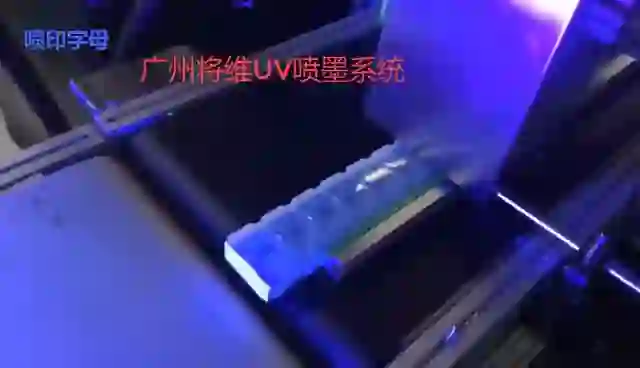
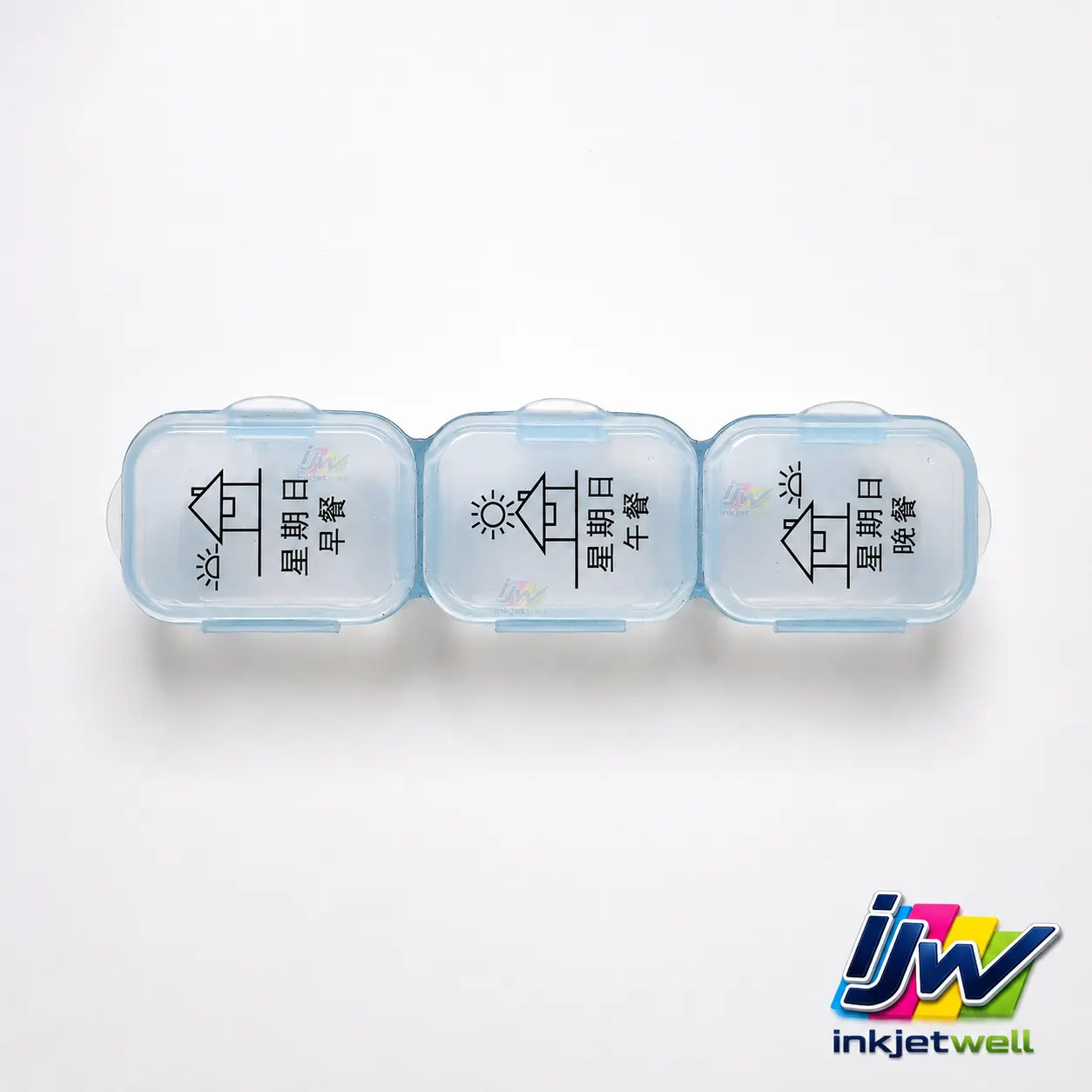
- Video confirms part detection, direct printing, UV curing and the finished weekday markings. A close-up sample shows small meal icons and Chinese text across three molded compartments.
Direct answer
UV inkjet can place small weekday labels, meal icons, lot data or other approved information directly on a molded pill organizer when its plastic, print height and transport orientation are controlled. This case combines a complete process video with a close-up output image, so buyers can evaluate both the machine workflow and the visible result.
Documented application evidence
The process clip shows a part entering the print zone, triggering the print, passing the UV cure and leaving with the weekday text visible. It is evidence of a working direct-to-object sequence.
The separate three-compartment sample shows crisp black icons and text positioned within individual molded panels. Neither asset is presented as medical-device certification or a claim of pharmaceutical-contact approval.
Application overview
| Application | Direct markings on molded organizer compartments |
|---|---|
| Content | Weekday text, meal icons, batch or variable information |
| Handling | Guided conveyor or indexed product position |
| Key geometry | Compartment height, hinges, ribs and print distance |
| Curing | Inline UV after direct printing |
| Evidence | Process video plus close-up sample |
Customer requirement and production challenge
An organizer appears flat, but hinges, latches and compartment walls can change the printhead clearance. Transparent material also makes orientation important because content can be viewed from either side.
Mold-release agents and low surface energy may reduce adhesion. A clean sample can perform differently from normal production parts, so qualification has to include ordinary molded batches.
Inkjetwell integration approach
Guides or fixtures keep the target compartments level and prevent rotation. Product detection starts the image at the approved origin, and the head-to-surface distance is checked across the complete part.
Inkjetwell evaluates pretreatment, black or white ink selection and UV setting on the identified polymer. Artwork is approved from the intended viewing side before variable fields are connected to production data.
How buyers can use this evidence
The buyer can use the video to map a proposed part path and use the close-up image to define acceptable icon and text detail. A useful trial includes assembled and unassembled organizers, the intended viewing side, cleaning method and the smallest critical artwork. If the same organizer has multiple colors or suppliers, samples from each version should be included. The resulting recommendation covers fixture or guide design, ink contrast, treatment, curing and the inspection points needed during changeover.
Demonstrated outcome
The paired evidence shows repeatable placement of compact graphics and text on a useful consumer-healthcare form. Direct printing can reduce a separate label operation for the approved information.
The same engineering method can extend to other compartment boxes and small plastic organizers, but each geometry and polymer requires its own production trial.
What this case does not claim
The images and video do not prove sterilization resistance, medical compliance or suitability for direct contact with medicine. Those are product-owner approval responsibilities.
Transparent parts can create confusing mirrored views; artwork orientation must be signed off on the actual assembled product.
Production validation checklist
- Identify polymer and any molding additives.
- Provide parts from normal molding production.
- Confirm viewing side and assembled orientation.
- Measure height variation across all compartments.
- Test adhesion, rub, cleaning exposure and cure.
- Approve variable-data and reject rules if codes change per part.
Common buyer questions
Can the system print separate text on each compartment?
Yes when the artwork maps each element to the compartment layout and the part position is repeatable.
Can it print on transparent plastic?
Yes on compatible plastic, but ink color and viewing side must be selected for contrast and orientation.
Is pretreatment always required?
No. It depends on the polymer, additives and acceptance test; low-surface-energy plastics often benefit from treatment.
Is the printed organizer medically certified?
The printing case does not confer certification. The product owner validates ink, use conditions and regulatory requirements.
Request an application test
Send Inkjetwell the actual production material or parts, final-size artwork, required print position and width, line speed range, product spacing, line photos or video, variable-data format, scanner requirements and required resistance tests. We will use those details to propose the printhead arrangement, transport or retrofit method, sensing, UV curing, data workflow and inspection plan.
Media evidence note: the images and videos on this page document Inkjetwell application samples or production configurations supplied for this case library. Customer identities are withheld unless separately authorized. Visible third-party marks remain the property of their owners and do not imply endorsement.