



- Market / location
- Inkjetwell coated and uncoated metal application samples
- Product / substrate
- Reflective metal lids and dark coated metal-can lids
- Verified result
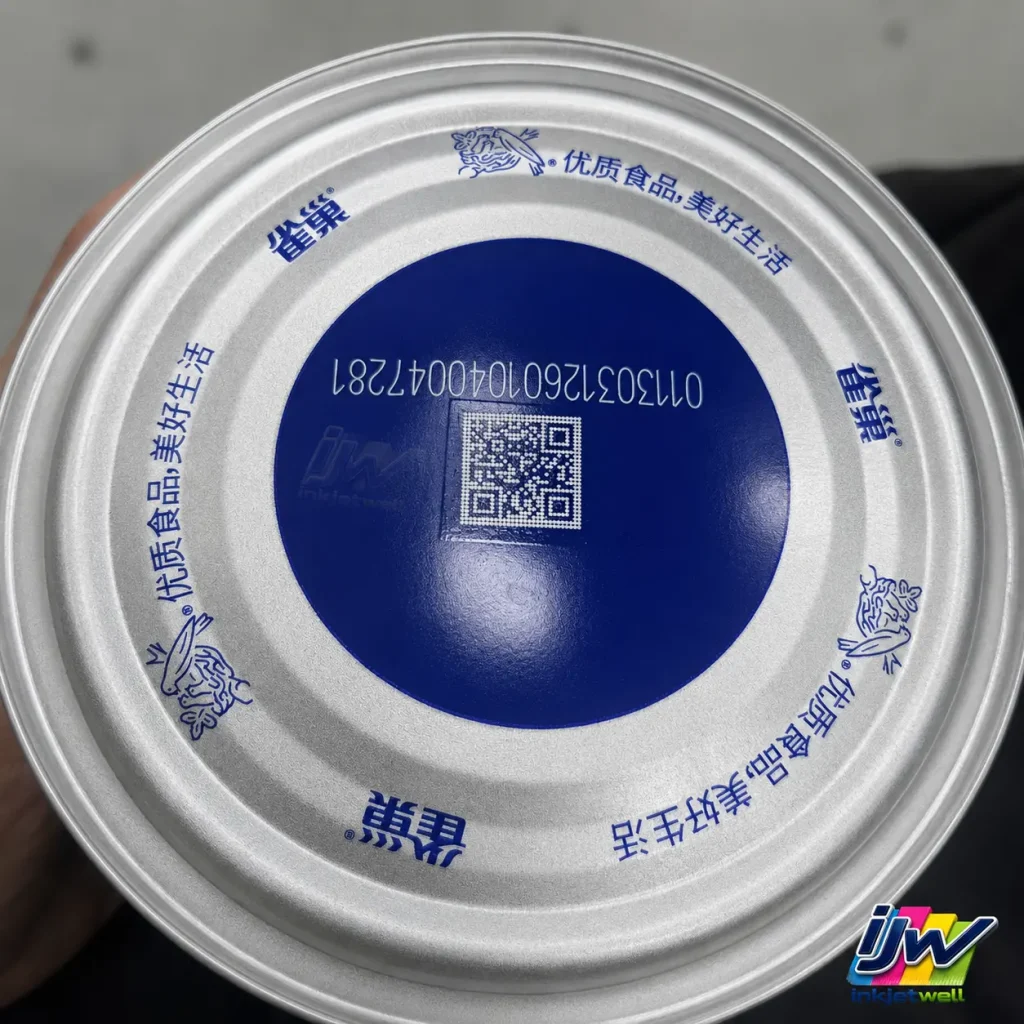
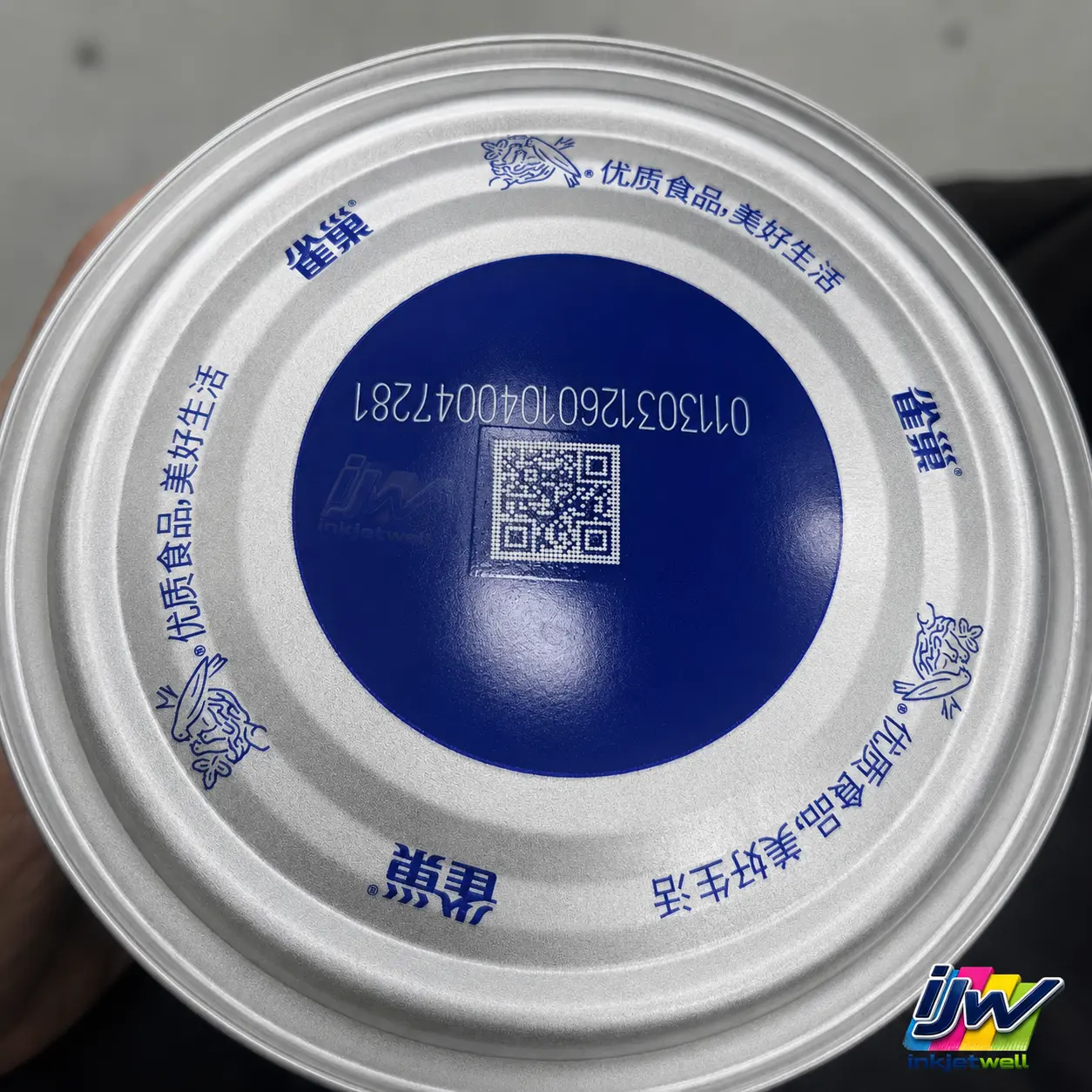
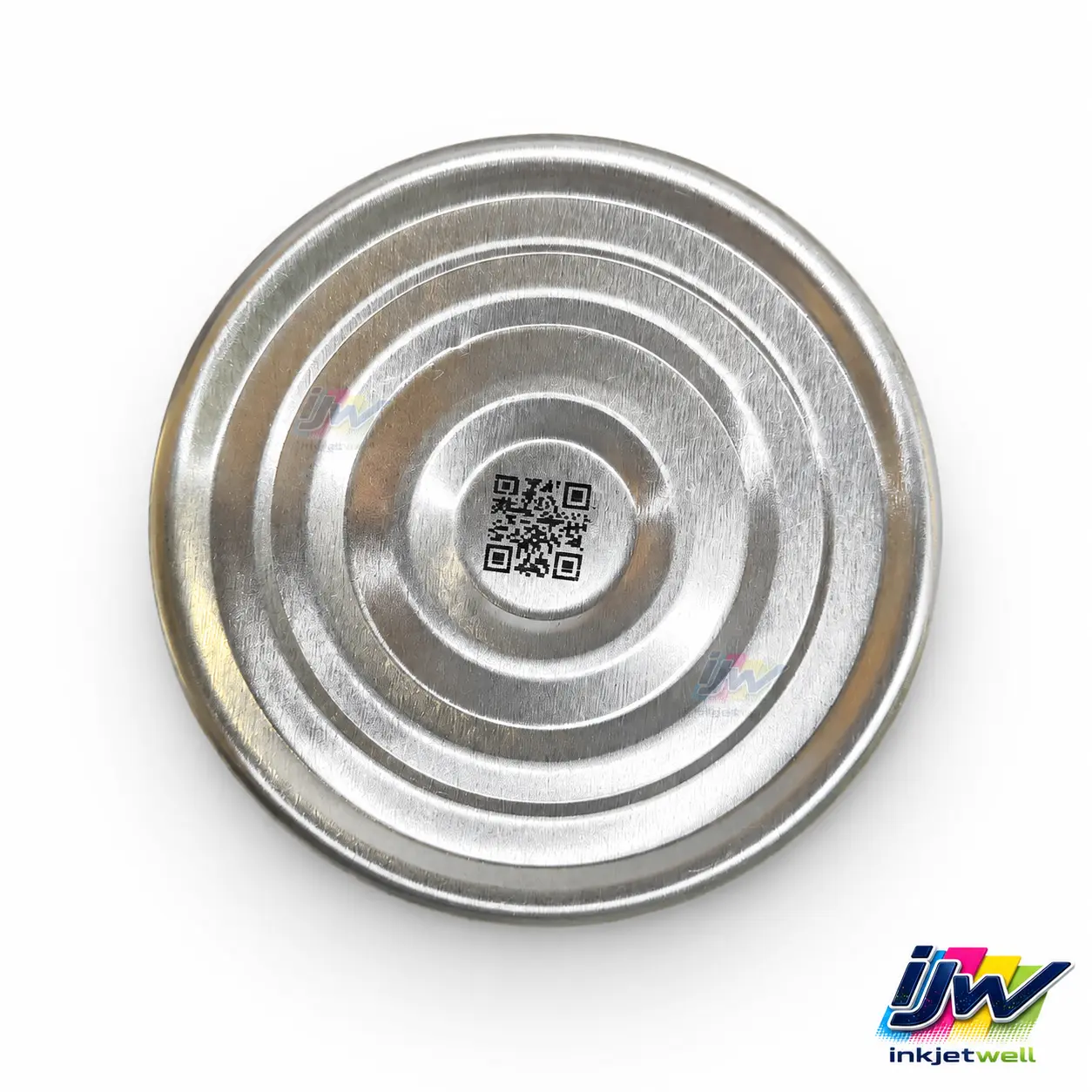
- Close-up images confirm a black QR code in a recessed reflective lid center and a white QR plus numeric identifier on a dark coated field. No production-line speed is claimed.
Direct answer
Metal packaging can be coded with black or white UV ink depending on the surface background and the scanner's required contrast. These two samples show complementary approaches: black ink on bright bare metal and opaque white ink over a dark coated center.
Documented application evidence
The photographs make the recessed geometry, reflective surface and code edges visible. The white sample also shows a human-readable numeric identifier paired with the code.
Third-party marks visible on a sample remain the property of their owner. The images are application evidence only and do not imply endorsement, customer identity or food-packaging approval.
Application overview
| Application | Direct code marking on metal lids |
|---|---|
| Contrast options | Black on bright metal; white on dark coating |
| Content | Unique QR, serial, lot and promotional data |
| Geometry | Recessed circular center with reflective surroundings |
| Key tests | Adhesion, rub, moisture and scanner lighting |
| Evidence | Two high-resolution close-up samples |
Customer requirement and production challenge
Reflective metal can produce glare around a code, while a lacquer or printed coating changes ink wetting and adhesion. Recessed or embossed features restrict the usable print zone and make part centering important.
If the lid is for food or beverage packaging, print location and ink use must remain within the packaging owner's approved process. A visual sample is not a migration or compliance test.
Inkjetwell integration approach
A fixture, indexing wheel or guided line presents the lid with consistent center position and height. The print and cure are aligned to the approved exterior zone, and code orientation is set for downstream handling.
The validation matrix compares cleaning, pretreatment, ink color and UV setting on the exact metal finish. Scanner testing is performed under agreed lighting and angle because reflection can be more important than nominal image resolution.
How buyers can use this evidence
A metal-packaging buyer should compare both sample approaches with the final lid artwork and scanner environment. The key early decision is whether the code is read from bright metal, a dark printed field or a dedicated contrast patch. Supplying coated production lids, not bare laboratory coupons, allows cleaning, adhesion and glare to be evaluated together. The engineering proposal can then define part orientation, ink color, UV cure, database triggering and any camera or reject mechanism.
Demonstrated outcome
The sample pair demonstrates that Inkjetwell can create machine-readable contrast across two very different metal backgrounds and include matching human-readable data.
For production, the selected method can support item-level promotions or traceability when the part trigger and database remain synchronized.
What this case does not claim
Bare metal, lacquer, printed coating and oily forming residue require different preparation. One sample recipe must not be generalized to every lid.
The images do not establish can-line speed, grade, sterilization resistance or regulatory approval.
Production validation checklist
- Provide finished lids from normal production.
- Identify coating, lubricant and cleaning process.
- Define exterior/contact boundary and regulatory responsibility.
- Specify code size, payload and scanner conditions.
- Test rub, moisture, heat and relevant downstream processing.
- Approve part orientation, reject and database logic.
Common buyer questions
Can UV inkjet print directly on bare metal?
It may after cleaning and adhesion testing; surface oil and finish must be controlled.
Why use white ink on a dark lid?
Opaque white creates code contrast when black ink would disappear into the background.
How is glare handled?
Code position, cell size, lighting, camera angle and sometimes a printed contrast field are evaluated together.
Can every lid receive a unique code?
Yes when the handling system presents one controlled part for each database record.
Request an application test
Send Inkjetwell the actual production material or parts, final-size artwork, required print position and width, line speed range, product spacing, line photos or video, variable-data format, scanner requirements and required resistance tests. We will use those details to propose the printhead arrangement, transport or retrofit method, sensing, UV curing, data workflow and inspection plan.
Media evidence note: the images and videos on this page document Inkjetwell application samples or production configurations supplied for this case library. Customer identities are withheld unless separately authorized. Visible third-party marks remain the property of their owners and do not imply endorsement.