



- Market / location
- China — production installations; customers anonymized
- Product / substrate
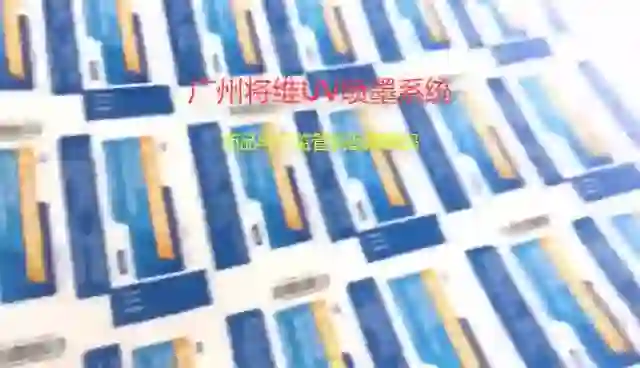
- Coated pharmaceutical cartons and multi-up medicine-box layouts
- Verified result
- Two production videos confirm configurable multi-head printing, carton transport and inline UV curing. The public evidence does not establish one universal head count, speed or scan grade.
Direct answer
A configurable multi-head UV inkjet system lets a pharmaceutical printer match the number and position of print zones to the actual carton layout. This case combines two production clips that show the same engineering principle on different lines: variable traceability information is added after the fixed package artwork, followed immediately by UV curing.
Documented application evidence
The first clip shows several print modules operating over repeated carton positions. The second, recorded in Zhuhai, provides an additional view of product transport and the coding stage. Together they support a genuine installation case without relying on a single polished product photograph.
Because the clips represent more than one configuration, the article intentionally describes a multi-head architecture rather than assigning an unconfirmed IJW model. The final head platform is selected from print width, resolution, line speed, ink channels and mechanical access.
Application overview
| Project type | Configurable multi-head production-line integration |
|---|---|
| Primary use | Pharmaceutical traceability and serialization |
| Possible content | Item codes, batch/expiry, serial numbers and human-readable data |
| Product format | Individual or multi-up folding cartons |
| Control | Sensor, encoder, job software and optional inspection |
| Model status | Selected after application testing; not inferred from video |
Customer requirement and production challenge
A converter may run many carton formats on one plant floor. A fixed one-head assumption can create unused coverage on one job and insufficient lane coverage on another. The correct design has to balance future flexibility with the practical need to keep every head aligned and serviceable.
Variable pharmaceutical data also introduces workflow risks not present in fixed graphics: repeated records, records consumed during waste, data mismatches after a stop and unreadable codes that remain visually present. Mechanical printing and information control therefore need one acceptance plan.
Inkjetwell integration approach
The project starts with a position map for every carton format. Inkjetwell evaluates whether print zones can share a head, require independent heads or need stitched coverage. Sensors establish product presence, encoder feedback tracks movement, and job software assigns the intended record to each location.
Where inspection is required, the camera can be placed after curing so it sees the finished mark. Lighting is especially important on gloss varnish or reflective graphics. The buyer defines whether the camera checks presence, content, readability, grade or all four.
Demonstrated outcome
The recorded lines demonstrate that multi-head UV coding can be added around existing pharmaceutical-carton handling equipment. The modular approach supports several lanes and coding positions while leaving fixed artwork production unchanged.
The result should be evaluated as an engineering capability, not a promise that one recipe fits every carton. A new coating, code size or line layout can change ink, curing, optical inspection and head-position requirements.
What this case does not claim
The supplied media does not confirm a named machine model for every installation. Model-neutral wording prevents the case from turning an application example into an inaccurate product claim.
No customer names are used, and visible brand information in source footage is not presented as an endorsement. Regulatory release remains with the pharmaceutical manufacturer.
Production validation checklist
- List all current carton formats and likely future layouts.
- Provide final code dimensions, content rules and sample databases.
- Measure transport width, speed range, skew and available mounting space.
- Test varnish, laminate and dark-background variants separately.
- Define data recovery after line stops and rejected cartons.
- Agree on a written factory-acceptance and site-acceptance test.
Common buyer questions
How many printheads does a pharmaceutical carton line need?
The number follows the print-zone width, lane spacing, resolution and carton layout. A video title or total machine width is not enough to select it.
Can the same system run different carton sizes?
Yes within the engineered adjustment range. Each approved format needs its own position map, job file and validation samples.
Can the system prevent duplicate serial numbers?
The print controller can participate in duplicate prevention, but the complete rule also depends on the customer's database, restart process, inspection and reject handling.
Are QR codes and DataMatrix codes both possible?
Both can be generated, along with linear barcodes and text, provided the final symbol size and print quality pass the customer's verification method.
Request an application test
Send Inkjetwell the actual production material or parts, final-size artwork, required print position and width, line speed range, product spacing, line photos or video, variable-data format, scanner requirements and required resistance tests. We will use those details to propose the printhead arrangement, transport or retrofit method, sensing, UV curing, data workflow and inspection plan.
Media evidence note: the images and videos on this page document Inkjetwell application samples or production configurations supplied for this case library. Customer identities are withheld unless separately authorized. Visible third-party marks remain the property of their owners and do not imply endorsement.