



- Market / location
- China — Shantou installation; customer identity withheld
- Product / substrate
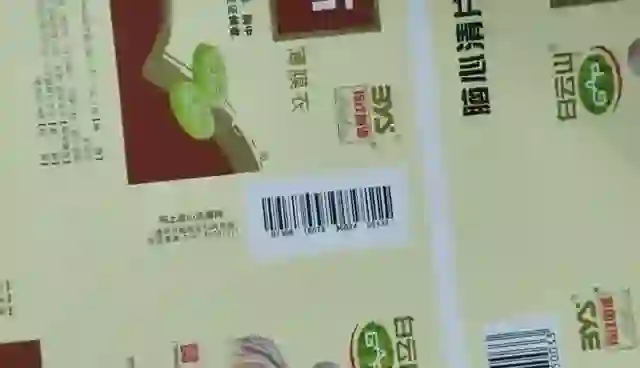
- Multi-up printed pharmaceutical cartons on a sheet-fed transport
- Verified result
- Production footage confirms a six-head layout, controlled sheet movement, repeated coding positions and inline UV curing. Exact line speed and code grade were not supplied and are not claimed.
Direct answer
A six-head UV inkjet system can add serialized QR codes, linear barcodes, batch data and other traceability content to several carton positions during one sheet-fed pass. In this installation, the print modules are distributed across the working width so a preprinted multi-up pharmaceutical sheet can receive variable information without replacing the customer's existing carton-printing process.
Documented application evidence
The supplied production video shows a sheet-fed pharmaceutical-carton line in Shantou with six printing positions and UV curing hardware installed over the transport. The footage records the actual material path, machine frame and operating environment rather than showing only an isolated laboratory sample.
The evidence confirms that Inkjetwell has implemented a multi-head architecture for repeated carton positions. It does not, by itself, establish a regulated code grade, a specific production speed or pharmaceutical compliance; those values must come from the customer's approved validation record.
Application overview
| Application type | Existing-line multi-head retrofit |
|---|---|
| Print arrangement | Six UV inkjet print positions across a sheet-fed layout |
| Typical variable content | Serialized QR/DataMatrix codes, barcodes, lot, expiry and human-readable text |
| Product handling | Controlled multi-up pharmaceutical carton sheets |
| Curing | Inline UV curing after printing |
| Evidence level | Production video; no unverified speed or scan-grade claim |
Customer requirement and production challenge
A multi-up pharmaceutical sheet creates two simultaneous control problems: every printed position must land inside its assigned carton panel, and every data record must remain associated with the correct position. Sheet skew, changes in transport speed and a stop-and-restart event can all affect registration or data order.
The coding station also works after fixed package graphics have already been printed. Varnish, coating and background color can change ink wetting and scanner contrast, so artwork approval on a computer screen is not sufficient. The final carton, final code size and intended inspection method have to be tested together.
Inkjetwell integration approach
The six-head frame is aligned to the carton layout rather than to a theoretical maximum width. Product sensing establishes the sheet start, encoder feedback follows movement, and the controller maps each variable record to its corresponding carton position. The UV lamps are located so the printed image is cured before the sheet contacts downstream guides or stacks.
For serialized production, the engineering scope normally includes data import, duplicate prevention, restart rules, waste handling and optional camera verification. A rejected sheet cannot simply be reintroduced unless the data workflow knows which records were consumed and which were not.
Demonstrated outcome
The recorded installation demonstrates stable transport through a six-head coding zone and a practical way to add variable information to an existing sheet process. The result is a scalable architecture: additional carton positions are handled by planned head placement rather than by stretching one print zone beyond its verified coverage.
For a buyer, the most useful conclusion is not a universal speed number. It is that the line, artwork grid, data allocation, curing and inspection can be engineered as one controlled system and validated against the customer's real cartons.
What this case does not claim
The video does not document the final ISO/IEC verification grade, reject rate, ink migration status or contractual throughput. Inkjetwell therefore treats those as project acceptance items, not as claims inferred from a demonstration video.
Pharmaceutical manufacturers remain responsible for regulatory approval, data governance and packaging release. The printer reproduces the approved variable record; it does not create or certify the regulatory content.
Production validation checklist
- Supply the final multi-up carton layout with every coding position marked.
- Test each coating, varnish and background color used in production.
- Define data order for normal running, stops, waste sheets and rework.
- Verify code size, quiet zone and contrast with the production scanner.
- Confirm UV shielding, maintenance access and downstream contact points.
- Record an approved sample and the agreed inspection method before release.
Common buyer questions
Why use six printheads instead of one wide image?
Six planned print positions can match separated carton panels and lanes without printing unused gaps. The correct arrangement depends on the sheet layout and required coding width.
Can each carton on the same sheet receive a different code?
Yes. The controller can allocate a separate database record to each mapped position when sensing, encoder feedback and sheet registration are synchronized.
Can this be added to an existing pharmaceutical line?
Often yes. Mounting space, transport stability, UV shielding, data interfaces and downstream inspection must be surveyed before the retrofit is confirmed.
Does the video prove a particular barcode grade?
No. It proves the installation and printing process shown. A formal grade requires the customer's final code, material, speed, lighting and verifier.
Request an application test
Send Inkjetwell the actual production material or parts, final-size artwork, required print position and width, line speed range, product spacing, line photos or video, variable-data format, scanner requirements and required resistance tests. We will use those details to propose the printhead arrangement, transport or retrofit method, sensing, UV curing, data workflow and inspection plan.
Media evidence note: the images and videos on this page document Inkjetwell application samples or production configurations supplied for this case library. Customer identities are withheld unless separately authorized. Visible third-party marks remain the property of their owners and do not imply endorsement.