




- Market / location
- China — Jieyang installation; customer identity withheld
- Product / substrate
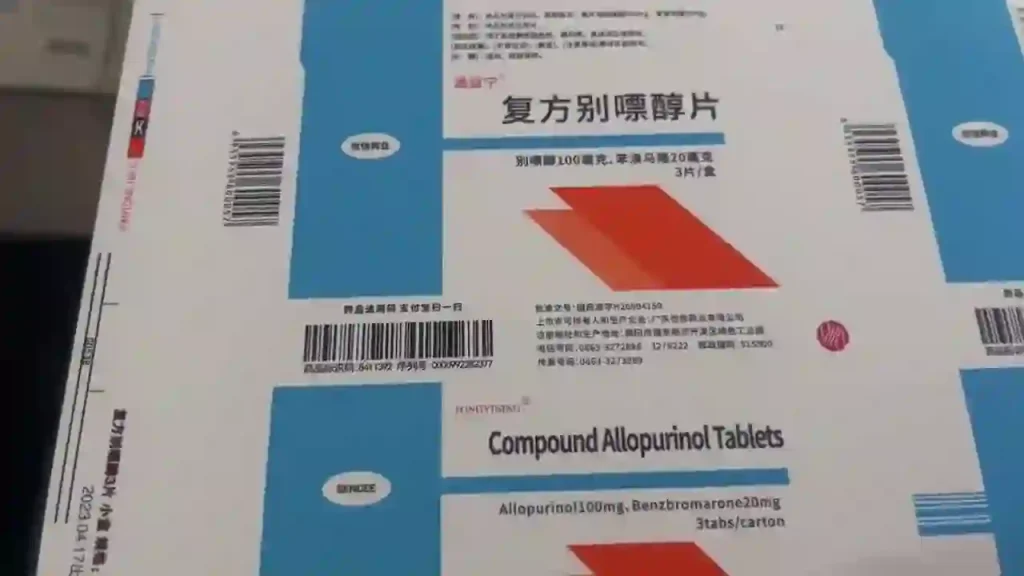
- Printed medicine cartons arranged in repeated sheet-fed positions
- Verified result
- Production footage confirms a three-head printing and UV-curing arrangement on pharmaceutical cartons. Final code specification, speed and acceptance grade remain customer-controlled validation items.
Direct answer
A three-head UV inkjet retrofit is a practical configuration when a pharmaceutical-carton layout contains three repeated coding lanes or separated print zones. The supplied Jieyang footage shows this arrangement running on an existing sheet-fed process, with the print modules positioned to the product rather than forcing the customer to replace the base machine.
Documented application evidence
The video documents real carton movement, the three-head mechanical frame, active UV curing and the surrounding production area. Multiple carton panels are visible, allowing buyers to understand how printhead count follows the physical layout of the work rather than a marketing label.
Customer and brand names are omitted from the article. The visible installation is used to support statements about integration and output handling only; no unsupported claim is made for regulated code content, inspection grade or hourly production volume.
Application overview
| Installation | Three-head retrofit on an existing sheet-fed line |
|---|---|
| Material | Preprinted pharmaceutical folding cartons |
| Data types | QR/DataMatrix, barcode, serial, batch, expiry and text |
| Registration | Sheet trigger plus movement synchronization |
| Drying method | UV curing immediately after the print zones |
| Public evidence | Installation video with customer anonymized |
Customer requirement and production challenge
Three repeated carton lanes require more than three independent images. Their timing, data sequence and lateral alignment must be coordinated so that a stop, missing sheet or skewed sheet does not shift one record into the wrong carton position.
Medicine-carton artwork also tends to contain small type and dense fixed graphics. Variable information needs a reserved clear area, sufficient quiet zones and a background that supports reliable machine reading after folding and packing.
Inkjetwell integration approach
Inkjetwell first maps the three print zones from the actual cutting and folding layout. The heads, sensors and curing units are then mounted around the usable transport area. Job software controls the variable field while guides and encoder feedback stabilize image position along the sheet direction.
The setup can be paired with camera inspection when the customer provides an acceptance rule. Presence detection, data comparison, code grading and rejection are different functions, so the required level should be specified rather than grouped under a vague promise of inspection.
Demonstrated outcome
The installation demonstrates a compact way to serve three carton positions in one pass. It also shows why printhead count is an engineering result: three heads are appropriate here because the carton layout and working width create three controlled zones.
For future variants, new carton artwork can be evaluated against the existing mounting positions. If the number or location of panels changes, the mechanical and data map must be reviewed before production.
What this case does not claim
No public record was supplied for line speed, scan grade or environmental resistance. These are deliberately excluded from the verified-result field.
The case does not state that every pharmaceutical carton can use the same ink or curing setting. Coating, varnish, storage and downstream handling remain part of application approval.
Production validation checklist
- Measure all three coding zones from final dielines, not from a preview image.
- Test sheet skew and registration at start, steady running and restart.
- Define how unused or rejected data records are handled.
- Evaluate ink adhesion after folding, stacking and packing.
- Confirm required camera functions and rejection logic.
- Retain signed production samples for future job changeovers.
Common buyer questions
Can a three-head system print three different serialized records at once?
Yes. Each mapped print zone can receive its own record when the data controller and sheet trigger are configured for the three-position layout.
Is three heads always the best choice for three carton lanes?
Not automatically. Code width, lane spacing, head coverage and access determine whether separate heads, stitched heads or another arrangement is better.
Can the UV system damage the existing carton artwork?
Curing energy and exposure are tested with the final printed carton. Heat-sensitive laminates, varnishes and foils require specific evaluation.
Can the retrofit keep the original feeder and transport?
It can when that transport provides sufficient control, mounting space and speed feedback. Otherwise guides, sensors or a dedicated coding section may be added.
Request an application test
Send Inkjetwell the actual production material or parts, final-size artwork, required print position and width, line speed range, product spacing, line photos or video, variable-data format, scanner requirements and required resistance tests. We will use those details to propose the printhead arrangement, transport or retrofit method, sensing, UV curing, data workflow and inspection plan.
Media evidence note: the images and videos on this page document Inkjetwell application samples or production configurations supplied for this case library. Customer identities are withheld unless separately authorized. Visible third-party marks remain the property of their owners and do not imply endorsement.